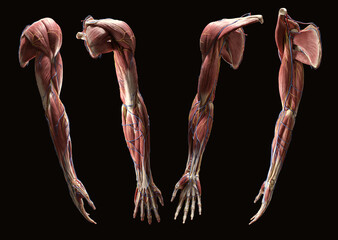
 Shoulders, Arms & Hands
 Hips, Legs & Feet
 Map Your Pain
Intention
Mind leads body.
Notice your shoulders right now. Let them drop. You just chose that.
Head, Neck & Spine
Tap a concern to see why it happens and how we treat it.

Burning upper-back tension, shoulder blade knots, and a heavy, tired neck.

Tight, gripping pressure that starts at the base of the skull.

Throbbing pain, light sensitivity, and deep pressure behind the eyes.

A locked upper spine that aches with deep breaths or twisting.

Hidden neck instability, sharp shooting pain, and limited turning.

Clicking or popping jaw, facial tightness, and teeth grinding.

The Flame's Communication Gate
Why it happens
Hours of forward-head posture at phones and screens flatten the neck's natural curve, compress the cervical nerves, and lock up the small muscles at the base of the skull.
Doc recommends
Gentle neck mobility and breath-guided stretches restore range. Move slowly and notice where you're holding tension without realizing it.
A remote worker spending 10+ hours a day hunched over a laptop had a visibly rounded neck and near-daily shoulder blade knots. Consistent cervical mobility work over several weeks brought back a more upright resting posture and cut daily tension down to occasional flare-ups.
Composite example based on real client patterns. Individual results vary.
The Mind's Cry for Clarity
Why it happens
Stress and strain tighten the muscles around the head and neck, especially at the base of the skull, which limits blood flow and builds pressure.
Doc recommends
Gentle neck and scalp work eases the pressure without overloading you. Cranio Release goes straight at the base-of-skull guarding behind most tension headaches, and many clients feel the pressure ease in the same session.
A client getting headaches four to five times a week, often bad enough to leave work early, added Cranio Release to regular sessions. Within a month, headaches became occasional and stopped disrupting the workday.
Composite example based on real client patterns. Individual results vary.
When Pressure Ignites
Why it happens
An overloaded nervous system, restricted circulation, and cranial tension can feed the throbbing pain and light sensitivity of a migraine.
Doc recommends
Dim light, plenty of water, and slow breathing help reset an overwhelmed nervous system. Choose stillness over stimulation. Cranio Release calms the same pressure driving the migraine, and our Somatic Stress & Archetype telehealth sessions help spot recurring triggers between episodes.
A client with migraines several times a month had tried many approaches with little relief. Adding Cranio Release and tracking patterns through telehealth check-ins reduced how often they hit and helped catch early warning signs.
Composite example based on real client patterns. Individual results vary.
The Axis of Motion and Breath
Why it happens
A stiff thoracic spine limits rotation and full breathing, so it often locks up during deep breaths or twisting movements.
Doc recommends
Thoracic mobility drills and focused breathing unlock movement through the spine. Frequency Recovery supports the tissue between sessions, because a deep-set stiff mid-back responds best to steady, compounding work.
A desk-bound client had gotten so used to a locked, aching mid-back they stopped noticing it, until deep breathing became uncomfortable. Thoracic mobility work with Frequency Recovery restored easy breathing and rotation within a few months.
Composite example based on real client patterns. Individual results vary.Read the story: Multi-System Crises ›

The Body's Memory of Impact
Why it happens
Whiplash starts with a sudden impact, usually a car accident or a hard hit in contact sports. The fast back-and-forth snap strains ligaments and deep stabilizing muscles that don't always show on early imaging, leaving instability, sharp pain, and limited turning long after it feels healed.
Doc recommends
Impact injuries affect both the tissue and the nervous system, so Cranio Release helps calm the protective guarding your body holds after the hit. Timelines vary more here than anywhere else: a recent, mild injury may resolve within 120 days, while older or more severe ones take longer. If your injury is recent, get cleared by your doctor first.
A client came in months after a rear-end collision, still dealing with sharp neck pain and struggling to check their blind spot. Structural work with Cranio Release over an extended plan gradually restored turning range and eased the lingering guardedness.
Composite example based on real client patterns. Individual results vary.Read the story: The Whiplash Echo ›

Where Tension Meets the Jaw
Why it happens
Clenching and grinding, often from stress held overnight, overworks the jaw joint and facial muscles. Over time that shows up as clicking, facial tightness, and a jaw that feels locked first thing in the morning.
Doc recommends
Gentle jaw release plus awareness training helps break the clenching habit before it tightens again overnight. Cranio Release targets the facial and cranial tension directly, and our Somatic Stress & Archetype telehealth sessions can help with what's driving the clenching.
A client with morning jaw stiffness and loud clicking assumed they'd just have to live with it. Cranio Release and stress-pattern work through telehealth brought the clenching under control, and the clicking became far less frequent within a couple of months.
Composite example based on real client patterns. Individual results vary.The add-ons suggested above, in plain terms. Add any of them when you book.
Pain often starts somewhere other than where you feel it.
Healers worked by these long before modern medicine named them, and your body still runs on them. Try each one as you read it.
Mind leads body.
Notice your shoulders right now. Let them drop. You just chose that.
As within, so without.
Unclench your jaw, and notice your breath soften with it.
Everything moves.
Hum for three seconds and feel it in your chest. Your body is never still.
Pain and ease are one line.
Make a tight fist, then let it go. Same hand, opposite ends.
The body heals in cycles.
Breathe in for four, out for six. Follow the ring.
Consistency is the cause. Change is the effect.
That slow breath just shifted your heart rate. Steady care does the same over weeks.
Change needs both.
Press your feet into the floor, then soften them. The work, then the hold.
You just felt that in your own body. Here’s how we’ll work together.
Before you book, here’s what you’re signing up for. QíKiSol Kinesio is clinical kinesiology that comes to your home, and it asks something of you. New guests commit to a visit at least every 21 days for the first 90 days, and doing your part between visits is required.
A mobile clinical kinesiology practice run by one person. Doc QiKi holds an MS in Kinesiology and served as a Navy 8404 FMF Corpsman, with two decades of hands-on care from the field to FEMA disaster response. Every visit starts by finding out why your body is guarding, then retrains it. The goal is a body that moves and handles stress differently a month from now.
If you want a spa visit, or someone on call whenever something flares up, this won’t be a good fit. Doc will tell you so up front.
Sessions are built from your assessment and may include applied kinesiology, assisted stretching, deep tissue and myofascial work, visceral and abdominal work, lymphatic drainage, cupping, gua sha and IASTM (scraping), acupressure, and sound and tuning-fork work. Essential oils and incense may be used.
You’re in control of what’s worked on, how much clothing you keep on, and the pressure. Say so at any point and it changes. Tell Doc about fragrance or skin sensitivities. Cupping and scraping can leave temporary marks.
New guests commit to a visit at least every 21 days for the first 90 days. After that, spacing is set together based on how your body is holding. Occasional or quarterly visits aren’t offered. Booking only when it hurts keeps you in a reactive loop that costs more time and money than a steady plan.
Do your home practice, follow through on recommendations, keep your intake honest and current, and tell Doc when something changes. Results depend on what happens between visits as much as during them.
Book at least 36 hours ahead. Rescheduling is always free. Cancelling within 12 hours carries a $75 fee, except for Neuro-Visceral Retainer guests. Have a clear, quiet space ready. Travel fees keep the clinic on the road. You’ll get an ETA by text, and you always receive your full session.
Doc may end a visit if the setting is unsafe or conduct is inappropriate, and the full session fee applies. Pets need to be secured, and the space should be free of distractions.
Packages and retainers are non-refundable once purchased, and unused balances expire on the package’s expiration date: 9 months after purchase, or 6 months for Focused Integration. Travel is waived at one primary address, chosen by the package holder at purchase. Once chosen, it stays the primary address for the life of the package and can’t be switched. Any visit at a different address, for anyone using the package, carries the regional travel fee each time. Telehealth consultations are booked separately and aren’t paid from package balances. Package hours (Focused Integration and the KINetic Systems Container) are for Neuro-Somatic Stretch sessions. Solo visits use 1.5 hours, or 1 hour on weekly Bexar County visits; groups of two or more book by the hour. The Neuro-Visceral Retainer includes labs and their interpretation in its monthly price.
A shared container is a plan for up to four people, so the cost is built to be split. Everyone on it is an active participant in their own care: each person keeps the same consistent schedule as the package holder, not a visit “just in case” something hurts. Shared hours are meant to be used steadily, so expect the balance to move faster with everyone active, and reload when it runs low. Anyone who doesn’t keep a plan comes off the package.
Every workday includes the drive between homes, and it doesn’t stretch to fit extra visits. How many sessions fit depends on how far apart they are, so times in each region are limited and fill in order of commitment. Priority goes to guests on active plans and retainers. Availability may be reduced or paused at times, and committed guests hear first.
The hours, the drive, and the vehicle go to guests who are working on changing. Doc may decline or end care if your plan keeps getting set aside or appointments are treated as disposable. If it isn’t the right fit, you’ll hear that directly.
QíKiSol doesn’t diagnose disease or replace your physician. Post-surgical and oncology guests need clearance from their care team. Sudden numbness, loss of bladder or bowel control, chest pain, or worsening weakness need emergency care, not a session.
Guests under 18 need a parent or guardian’s consent, and a parent or guardian present for in-home sessions.
Lab panels ordered through QíKiSol guide nutrition and recovery planning. They aren’t a medical diagnosis. Share results with your physician.
Astro-Locality Mapping and Frequency Recovery are complementary wellness practices, not medical treatment.
Labs, supplements, orthotics, and other recommendations are your choice, but following them is part of getting results. Supplements are offered at practitioner cost, with no upselling.
HSA/FSA eligibility depends on your plan. A Letter of Medical Necessity supports reimbursement but doesn’t guarantee it.
Every body responds differently. Case stories reflect individual guests and aren’t a guarantee of your results.
If you’re seen through a campus Staff Wellness Day, the Consent and comfort, Safety and medical care, Minors, Privacy, and Results vary sections apply to your session. The standard of care, package, and travel terms apply only if you choose to book care at home.
All clinical communication and scheduling happen in the encrypted Jane portal.
Put this on while you look around. Your body will tell you what it’s ready to let go of.
Your first step
Book your first visit and I’ll bring the table to you.
“He doesn’t just fix you on the table, he actually advises us on nutrition, sleep, and lifestyle habits.”
“Doc QiKi used precise clinical kinesiology and functional bodywork to address the underlying muscular trauma.”
“After my husband’s treatments and surgery for esophageal cancer… He is so easy to talk to and very compassionate.”
“Back tightness and neck pain to the point it got in the way of sleep and exercise. Had instant and lasting relief.”
“His intuition and thorough understanding of trigger points and imbalances was extremely apparent… I’m sleeping much better, waking up without pain, and have greatly diminished my migraine frequency.”
“After just one session, Doc was able to help relieve pain and help orchestrate healthy range of motion where my chiropractor could not.”
“Worked with me since day one with my medical PTSD. I cannot use lotions so he was willing to work with me… so I can still relax and release the pain.”
Mobile Kinesiology & Neuro-Somatic Therapy serving San Antonio and the Hill Country.
To protect your medical privacy and ensure data accuracy, all clinical communication and scheduling takes place exclusively within our encrypted portal.
